Prof. Anita assigned our 205 class a UCaSal Zoom conversation. Going into the Zoom story circle with students from Argentina, I expected the conversation to highlight clear cultural differences. I thought I would walk away with new facts about Argentina that felt distinct from my own experience. Instead, the conversation felt familiar to conversations I had with domestic students in my freshman year. I didn’t expect this, and it changed how I think about intercultural interaction.
One moment that stood out was when Alejondro talked about feeling uncomfortable with the custom of greeting people with a kiss on the cheek. I had assumed that people generally feel aligned with norms of their own culture, but hearing him describe that discomfort led to my realizing that isn’t true. I’ve had similar feelings in the U.S., especially around expectations to be socially outgoing. When my classmate Alex compared the reserved culture of Boston to the more social coffee shop culture in Arizona, I immediately related that to my experience growing up in the Midwest, where there is often pressure—especially for women—to be friendly and accommodating. Candela’s description of the emotional intensity of soccer games also reminded me of how sports function in the U.S. as a way to express identity and belonging.
What surprised me most was how much overlap there was in our experiences. We didn’t talk much about differences in class or access, and I noticed that most of the examples people gave were fairly universal. At the time, that made the conversation feel fun or easy, and accessible. Looking back, I think that might also point to a limitation. It’s possible that the structure of the story coil encouraged us to focus on shared experiences rather than more difficult ones. Someone from a different socioeconomic background, or from a less internationally connected institution, might have experienced the conversation differently or felt less comfortable speaking openly.
This connects to the idea of intercultural competence that we’ve discussed in class. We have learned not just about differences between cultures, but understanding variation within them. I came into the conversation assuming culture was something more fixed and representative of a group. Now I see it as something people negotiate individually, even within the same country and institution. The shift in my thinking didn’t come from learning new “facts,” but from hearing people describe their own relationship to their culture in real time.
The way the conversation was structured also mattered. Because we were asked to share personal stories, it made it easier to connect and to reflect on our own experiences while listening to others. I was constantly comparing their experiences and my ownI used to think intercultural learning meant identifying differences. Now I think it has more to do with recognizing both shared experiences and the limits of those similarities through how they are shared. The goal of the talk was to connect, thus we only discussed commonalities. This experience made me more aware of how quickly I generalize culture, and how important it is to leave space for individual perspectives.
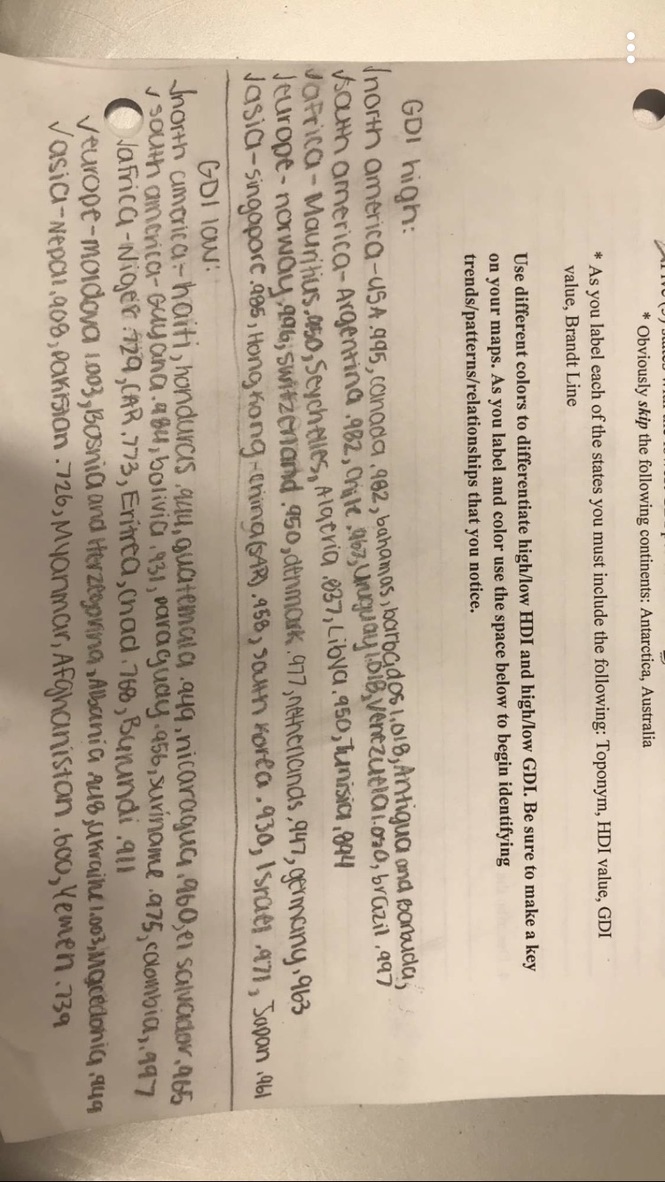
Below is a worksheet from when I was first learned about Argentina in high school via The Human Development Index (HDI) and the Developing Risk Index (DRI:11/8/2023: Argentina UCaSal Zoom COIL Story Circle Reflection: The students were incredibly nice and conversational. I found the conversation with my group to be not enlightening but comfortable and valued how forthcoming they were with specific examples of culture and identity. I have learned that there is no correct way to engage with others of a specific country because culture varies so drastically within a country and its people. Alejondro, in my group, spoke of his uncomfortability with Argentinian culture kissing on the cheek. Alex talked about dismissive Boston vs social coffee shop in Arizona and the cultural diversity of the United States that I related to experiencing. We also spoke about the expectation for women to go out of their way to be social in Argentina and I have felt that in the midwest. Candela talked about the importance of soccer matches in Argentina and feeling the most patriotic while wearing a jersey. I found we had more in common than I expected. Socioeconomic boundaries didn’t come up in conversation. The cultural examples we provided were accessible to all which I found interesting, and I realized how universal feelings of non belonging and belonging are. I wonder if another elite institution with less socioeconomic diversity than Wesleyan would have been less accessible to me, or less forthcoming with information. I feel as though regardless the conversation would be fruitful because of the setting establishing ability for connection.